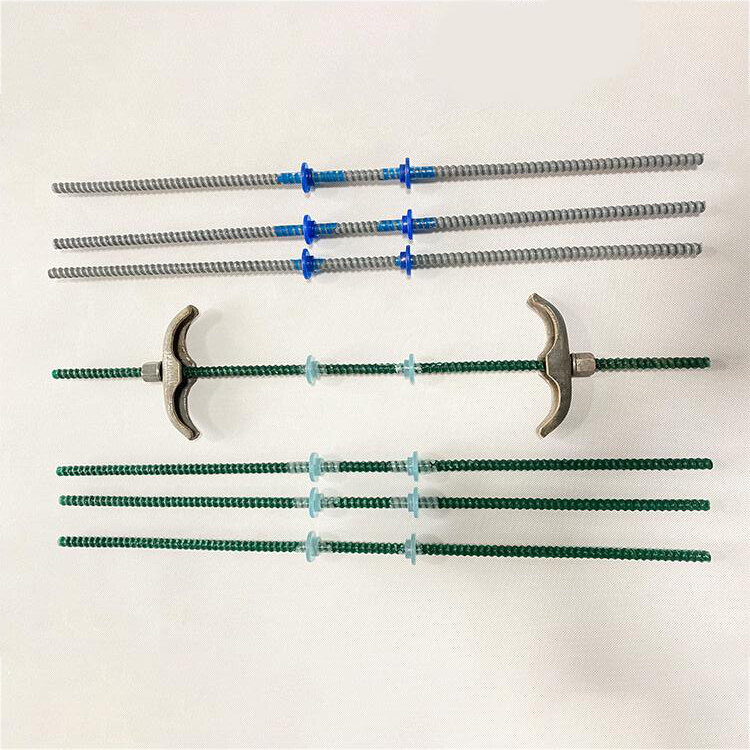
Fiberglass Through-wall Bolt
Product Advantages
- 1Corrosion-resistant and durable design effectively solves the rusting issues common with traditional steel formwork tie rods.
- 2Easy to install and remove; reusable multiple times.
- 3Significantly reduce construction costs
- 4Lightweight for easier handling and installation
- 5Smooth surface that won't damage formwork
- 6Suitable for various building wall construction applications
Reference Price
¥6-18/piece
*Actual price varies based on specifications and quantity.
Use Cases
I. Product Overview
Fiberglass Wall-Sleeve Bolt (also known as GFRP water-stop bolt, fiberglass tie rod, or GFRP through-bolt) is a new composite fastener made from high-performance alkali-free glass fiber as the reinforcement and premium corrosion-resistant resin (such as vinyl ester or epoxy) as the matrix, produced via pultrusion and threading processes. As a revolutionary alternative to traditional steel wall-sleeve bolts, this product is widely used for tying and waterproofing concrete formwork in underground utility tunnels, metro tunnels, sewage treatment tanks, hydraulic engineering projects, basements, and civil air defense structures. It effectively eliminates persistent leakage issues caused by metal bolt corrosion in underground construction.
In traditional concrete wall construction, steel tie rods pass through formwork on both sides to provide clamping tension. After pouring, the exposed ends of the rods are cut off and removed, while the middle section (with a waterstop plate) remains permanently embedded in the wall. Steel tie rods are highly susceptible to corrosion in damp environments, groundwater, saline-alkali conditions, or chemical media. Corrosion-induced expansion can crack the concrete around the rod holes, creating permanent leakage paths. This is a major hidden risk for leaks in basements and tunnel walls. Additionally, metal tie rods conduct electricity and magnetism, making them incompatible with subway signal-sensitive zones. Post-formwork removal requires cutting, grinding, rust removal, sealing, and anti-corrosion treatment—resulting in complex processes, high labor costs, and significant rework rates.
The all-fiberglass wall-through bolt contains no metal components, is rust-proof, corrosion-resistant, electrically insulating, and non-magnetic. With a service life matching that of concrete, it is the ideal upgrade for wall-through bolts in underground waterproofing projects, corrosive environments, and electromagnetic-sensitive applications. Full-scale wall tests and real-world engineering applications confirm that the new GFRP wall-through bolt offers high construction efficiency, low labor intensity, excellent waterproofing performance, and a clean, aesthetically pleasing wall surface.
II. Product Type and Structural Form
Based on engineering requirements, fiberglass wall-penetrating tie rods are mainly categorized into the following three types:
(I) Through-wall fiberglass screw bolt (full-length type)
The threaded rod spans the entire wall, passing through formwork on both sides. It features tightening threads at both ends and includes a waterstop plate in the middle. Ideal for standard wall formwork tie-in applications, it offers easy installation and cost efficiency. Standard M12 rods deliver tensile strength exceeding 400MPa, fully meeting concrete lateral pressure requirements for typical shear wall formwork, with compatible spacing of 400–600mm. A single M12 rod weighs less than 0.3kg, allowing manual handling and installation without the need for lifting equipment.
(II) Fiberglass Waterstop Screw (For Waterproofing Only)
An all-in-one waterproofing fastener integrating an expansion waterstop structure on a standard fiberglass wall-through bolt. Designed specifically for concrete walls in basements, water tanks, and civil defense projects with stringent impermeability requirements. Unlike traditional steel waterstop bolts that rely on welded stop plates—prone to corrosion at the weld seams due to constant moisture exposure—this fiberglass bolt features a one-piece molded waterstop ring. The ring bonds seamlessly with the bolt body, leaving no gaps. Upon contact with water, it automatically expands 2–3 times, offering superior resistance to displacement and eliminating weld corrosion entirely. Its waterproofing lifespan matches that of the concrete structure itself. Standard M14 models accommodate waterproof shear walls ranging from 300 to 500mm in thickness, with installation spacing adjustable between 450 and 550mm, fully complying with underground engineering waterproofing specifications.
(III) Fiberglass Tie Rods (Scenario-Based Customization)
Customized product line optimized for specialized engineering needs, with enhanced compatibility and extreme-condition adaptability. Thread precision strictly matches national standard tolerances for steel tie bolts, ensuring seamless integration with existing S-clamps and nuts used with traditional steel rods—no tool changes or retraining required for construction teams, enabling near-zero-cost material substitution. Specifically designed for shield tunnel end shafts, the product can be directly cut by shield machine cutterheads without blade chipping or tangling issues common with conventional steel rods. Performance grades cover mechanical properties corresponding to 4.6 class, with customizable diameters from M10 to M16 based on wall height.
3. Core Performance and Outstanding Advantages
In complex underground construction and harsh environments, fiberglass wall ties deliver comprehensive advantages that traditional steel cannot match.
1. Ultimate corrosion resistance eliminates leakage risks.
- Neither the glass fibers nor the resin matrix undergo chemical reactions with water, chlorides, acids, or alkalis.
- In high-water table underground environments, saline-alkali strata, coastal tunnels, and chemical wastewater corrosion zones, it remains rust-free and corrosion-resistant.
- The outer surface resin content exceeds 95%, effectively eliminating permanent leakage paths caused by screw corrosion.
- Full-scale wall tests demonstrate that concrete walls using GFRP through-wall bolts deliver excellent waterproofing and impermeability, with long-term reliability exceeding traditional solutions by over 80%.
2. Lightweight yet strong, efficient construction
- Product density is only 1.8–2.1 g/cm³, weighing just 1/4 of a carbon steel screw of the same specifications.
- Significantly reduces workers' lifting and installation workload. In field tests for metro supporting projects in Taiyuan, the installation time per unit was reduced to just 15 seconds.
- Reduces weight by 75% compared to traditional steel bolts, doubling daily installation output per worker.
- Tensile strength up to 400–1000 MPa, effectively resisting the high lateral pressure during concrete pouring to prevent formwork bulging or bursting.
3. Non-conductive and non-magnetic to ensure safety in specialized projects
- The product features an extremely high volume resistivity (> 10¹² Ω·cm) and is completely non-magnetic.
- Perfectly achieves electrical isolation in projects with extremely stringent electromagnetic requirements, such as subway signal machine rooms, substations, hospital MRI rooms, and radar stations.
- Prevents eddy current heating and magnetic interference; no metal conductors are formed within the concrete after installation.
- Completely eliminate eddy current issues during the post-operation phase.
4. Cuttable, easy and safe to install
- Unlike steel rods, these formwork tie rods can be snapped flush with the wall using a dedicated tool after form removal, eliminating the need for open-flame cutting such as gas torches.
- Eliminate the tedious steps of traditional screw cutting, grinding, rust removal, and anti-rust painting.
- Significantly reduce fire hazards in confined underground construction environments
- No additional cutting or anti-rust painting is needed during subsequent plastering, significantly reducing the difficulty of chasing and patching walls.
- The wall surface will not exhibit rust stains from traditional metal screw ends.
5. Thermal expansion matching, reliable interfacial bonding
- The product's coefficient of thermal expansion closely matches that of concrete, enabling coordinated deformation under temperature variations.
- Low interfacial thermal stress; resistant to delamination and cracking during long-term service.
- The bonded interface between the water stop ring and concrete maintains stable permeability performance, effectively ensuring wall waterproofing.
6. Long-lasting, maintenance-free. Cost-effective across the entire lifecycle.
- Steel through-wall tie rods develop severe corrosion in corrosive environments within 3–5 years, requiring repeated repairs for leaks.
- Fiberglass formwork tie rods are designed for a service life matching that of the concrete structure (over 50 years), requiring no maintenance throughout their entire lifecycle.
- Comprehensive analysis shows that using the full range of fiberglass wall penetration fasteners can reduce the overall formwork cycle by 25%.
- Reduce labor costs for subsequent wall finishing by 40%
IV. Key Technical Specifications
| Parameter Item | Typical Value |
|---|---|
| Nominal Diameter | M8, M10, M12, M14, M16, M20, M24, etc. |
| Length | Customized by wall thickness (standard 300mm–3000mm) |
| Tensile Strength | 400–1000 MPa |
| Density | 1.8–2.1 g/cm³ (approximately 1/4 that of steel) |
| Fiber Volume Fraction | 60%–70% |
| Volume Resistivity | 10¹² Ω·cm |
| Operating Temperature Range | –40°C to +120°C (special resins up to 180°C) |
| Waterstop Ring Material | One-piece molded silicone/homologous composite |
| Alkali resistance | Strength retention > 90% in pH=12–13 environment |
| Thread Form | Full Thread / Double-Ended Thread |
Note:The inner diameter of the waterstop ring should be 3–5 mm smaller than the screw's outer diameter to ensure optimal water stopping performance.
V. Core Application Scenarios
Fiberglass wall tie rods are engineered for underground structures, waterproofing projects, and corrosive environments. Key application scenarios include:
Underground Utility Tunnel
The main wall formwork of the utility tunnel uses bolted tensioners with waterstops, replacing traditional steel through-wall bolts. This eliminates corrosion risks from high humidity and water levels underground, ensuring 100-year waterproofing for the tunnel structure.
Metro Tunnel Engineering
Used in tunnel lining walls, shield shaft side walls, and station structural walls, paired with GFRP rebars and GFRP I-beams to create a fully composite, non-magnetic support and waterproofing system.
Wastewater Treatment and Hydraulic Structures
Water-conveying concrete structures such as sewage treatment tanks, sedimentation basins, reservoirs, and sluices, designed to resist acid-base corrosion from wastewater and prolonged submersion.
Basement and Civil Air Defense Engineering
Eliminates the chronic issues of rust expansion and wall cracking/leakage caused by traditional steel tie rods in damp underground environments for basement shear walls and civil air defense exterior walls.
Coastal and Saline-Alkali Land Engineering
Coastal buildings and structures on saline-alkali land, designed to resist chloride ions from seawater and salt-alkali corrosion.
Electromagnetic Sensitivity Engineering
Eliminates electromagnetic interference from metal screws in engineering projects with strict EMI requirements, such as subway signal zones, hospital MRI rooms, precision laboratories, and substations.
Chemical Plants and Corrosive Environments
Concrete wall construction in corrosive environments such as chemical plants, pickling workshops, and electroplating shops.
6. Construction Key Points
1. Installation and Fastening
The installation method for fiberglass through-wall tie rods is essentially the same as that for traditional steel tie rods. You can secure them using the matching GFRP nuts or the existing steel S-clamps and nuts. When tightening, control the torque to avoid damaging the rod threads from over-tightening. M12规格is suitable for a standard spacing of 400–600mm, while M14supports a spacing of 450–550mm.
2. Waterstop Ring Installation
The waterstop ring should be positioned at the center of the wall thickness and fully embedded in the concrete. The one-piece injection-molded waterstop ring fits seamlessly against the screw base, offering superior resistance to misalignment.
3. Formwork Stripping and End Treatment
Remove formwork after concrete reaches design strength. Fiberglass through-wall tie rods require no rust-proof cutting or secondary anti-corrosion sealing; simply snap off the exposed ends flush with the wall surface using a dedicated tool, then seal and level with waterproof mortar. This eliminates the tedious steps of cutting, grinding, rust removal, and applying rust-inhibiting paint required by traditional tie rods, significantly reducing construction steps and shortening the formwork cycle.
4. Three-stage end recovery (if applicable)
The end screw of the three-piece wall-through bolt can be unscrewed and recycled after formwork removal, while the middle section remains permanently embedded in the wall. This design offers lower overall costs.
5. Storage and Protection
Store the product in a dry, well-ventilated area away from direct sunlight to prevent UV degradation of the resin matrix. Avoid impact with hard objects during handling to prevent damage to the threads.
VII. Why Choose Anhui Send New Material Technology Development Co., Ltd.?
Anhui SenDe New Materials Technology Development Co., Ltd. was established in 2017 6, located at No. 19, Jingwu Road, Quanjiao Economic Development Zone, Chuzhou City, Anhui Province. We are a leading manufacturer specializing in the R&D, production, and sales of fiber-reinforced composite materials. Our product portfolio includes galvanized止水 screws (waterproof formwork tie rods), fiberglass rebar, fiberglass I-beams, fiberglass rock bolts, hollow fiberglass anchor bars, fiberglass rods, and more. Choose SenDe New Materials for these core benefits:
(1) Focus on Underground Engineering: Targeted Product R&D
Standard fiberglass threaded rods on the market generally follow generic industrial specifications and lack targeted optimization for critical underground conditions such as waterproofing, corrosion resistance, and fire retardancy. Sende's fiberglass wall-through rods are engineered specifically for underground utility tunnels, metro lines, and wastewater treatment facilities. They feature rail-grade flame-retardant formulations and a corrosion-resistant vinyl ester resin system, with no recycled materials or inferior fillers. These rods meet railway transit acceptance standards for tensile strength, corrosion resistance, aging resistance, and batch consistency. With material origins and performance matching GFRP rebars and I-beams, they are fully compatible with all-composite underground structural systems, eliminating the failure mode of traditional steel-plastic hybrid systems where localized metal corrosion leads to overall structural collapse.
(II) Scalable Capacity and Reliable Delivery
The company operates over 30 fiberglass rebar production lines, 18 fiberglass anchor rod lines, and more than 10 fiberglass profile lines, with an annual capacity of 35,000 tons. As one of our core products, the fiberglass waterstop screw is manufactured at scale to ensure reliable delivery for large-volume orders, meeting both lead time and quality requirements for major construction projects.
(III) Technology R&D and Independent Intellectual Property Rights
The company holds 7 invention patents and 20 utility model patents, with proprietary rights over its production equipment and processes. We actively collaborate with universities and research institutions to drive continuous product technology upgrades.
(4) Certified Authority and Quality Assurance
Our company holds ISO9001 Quality Management System certification and other international quality accreditations. Our rigorous quality control ensures every batch meets national and industry standards. Each batch includes a Certificate of Conformity and Performance Test Report, supports third-party sampling re-verification by CMA/CNAS accredited labs, and provides complete documentation for project acceptance. Fully compliant with metro project requirements from design drawings to final acceptance and audit archiving.
(5) One-stop solutions for the entire product line
The company provides a complete range of matching GFRP accessories, including GFRP rebar, I-beams, rock bolts, anchoring sleeves, and specialized clamps. Glass fiber wall penetration bolts can be customized to meet project requirements with varying diameters, lengths, thread specifications, and waterstop ring dimensions. Precise specification matching eliminates the need for multi-vendor price comparisons and coordination, streamlining procurement and reducing lead times. Our company holds qualifications for both self-operated and agency-based import and export of various goods and technologies, with products exported to Europe, North America, Southeast Asia, and other regions worldwide.
(VI) Specialized Technical Empowerment and On-Site Support
Backed by a professional technical team, we offer specialized services including specification selection, structural load analysis, construction process coordination, and on-site technical briefings to overcome design and construction challenges when replacing traditional metal fasteners with composite alternatives. Our in-house large-scale production lines ensure ample capacity to meet the batch and phased supply needs of major metro projects. All products are fully protected during packaging to prevent bending or damage during transit.
(7) Comprehensive After-Sales Service
Comprehensive after-sales warranty with full quality assurance. Returns and exchanges available for defective products. Partner with confidence, worry-free.
VIII. Summary
GFRP wall-through rods offer superior corrosion resistance, lightweight strength, electromagnetic insulation, easy cutting and installation, and long-term maintenance-free performance. These advantages fundamentally resolve the industry's longstanding issues with traditional steel rods—such as rusting in damp underground environments, failed waterstops, and wall leakage. Testing and field applications confirm that the new GFRP rods deliver high construction efficiency, excellent waterproofing, and a clean, attractive wall finish.
Eliminate the drawbacks of traditional metal threaded rods—rust, water leakage, signal interference, and high maintenance costs. Choose SenDe Engineering-Grade Glass Fiber Through-Wall Rods for an integrated upgrade that delivers waterproofing, corrosion resistance, electrical insulation, safety, labor savings, and long-term durability in underground construction. Our complete GFRP composite support system comes directly from Anhui SenDe New Materials, the original manufacturer. Partner with us to source reliable GFRP through-wall rod solutions: choose a direct manufacturer, specialized compatibility, and consistent quality—the trusted choice for replacing traditional metal rods.